

DESCRIPTION:
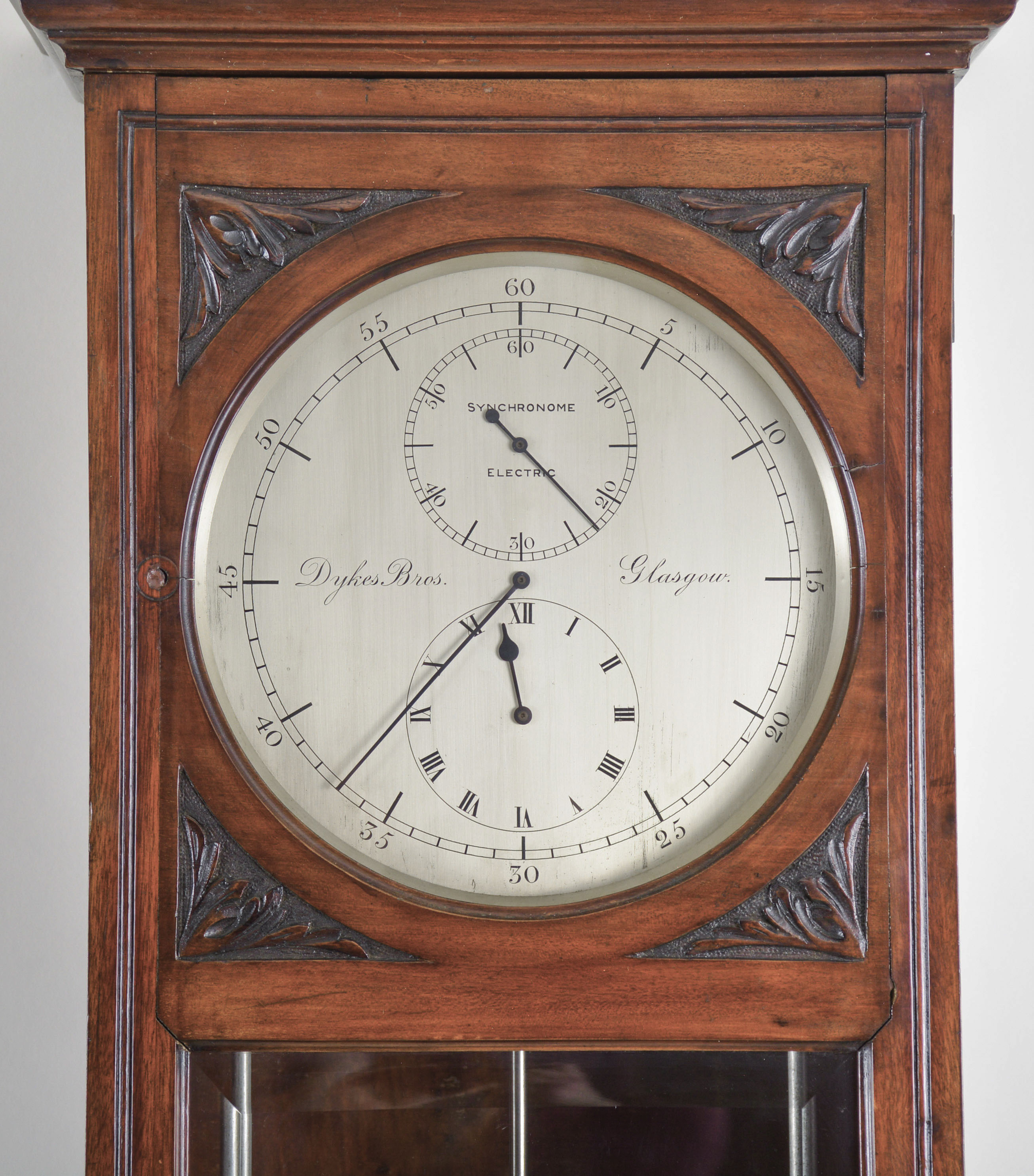
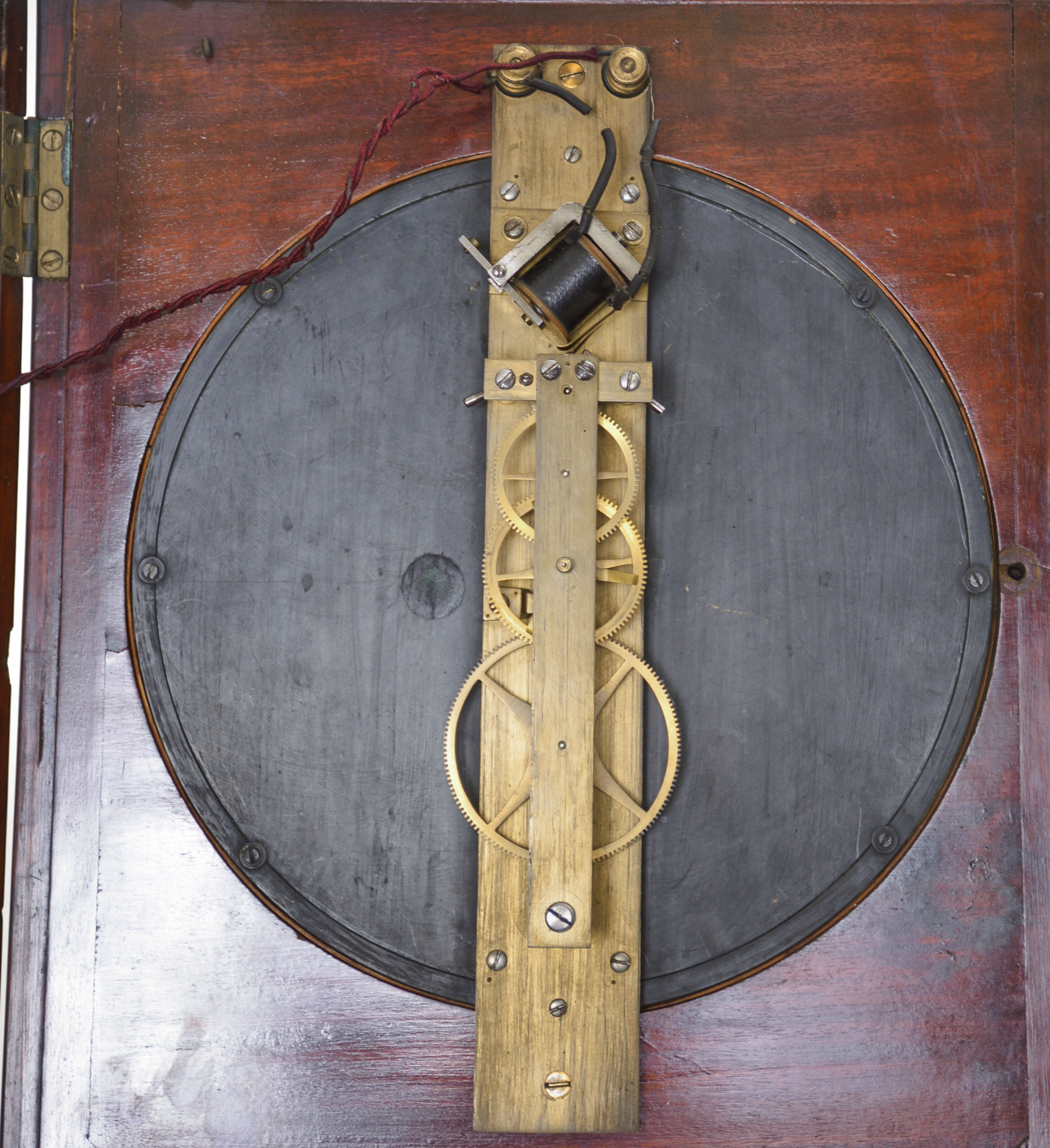
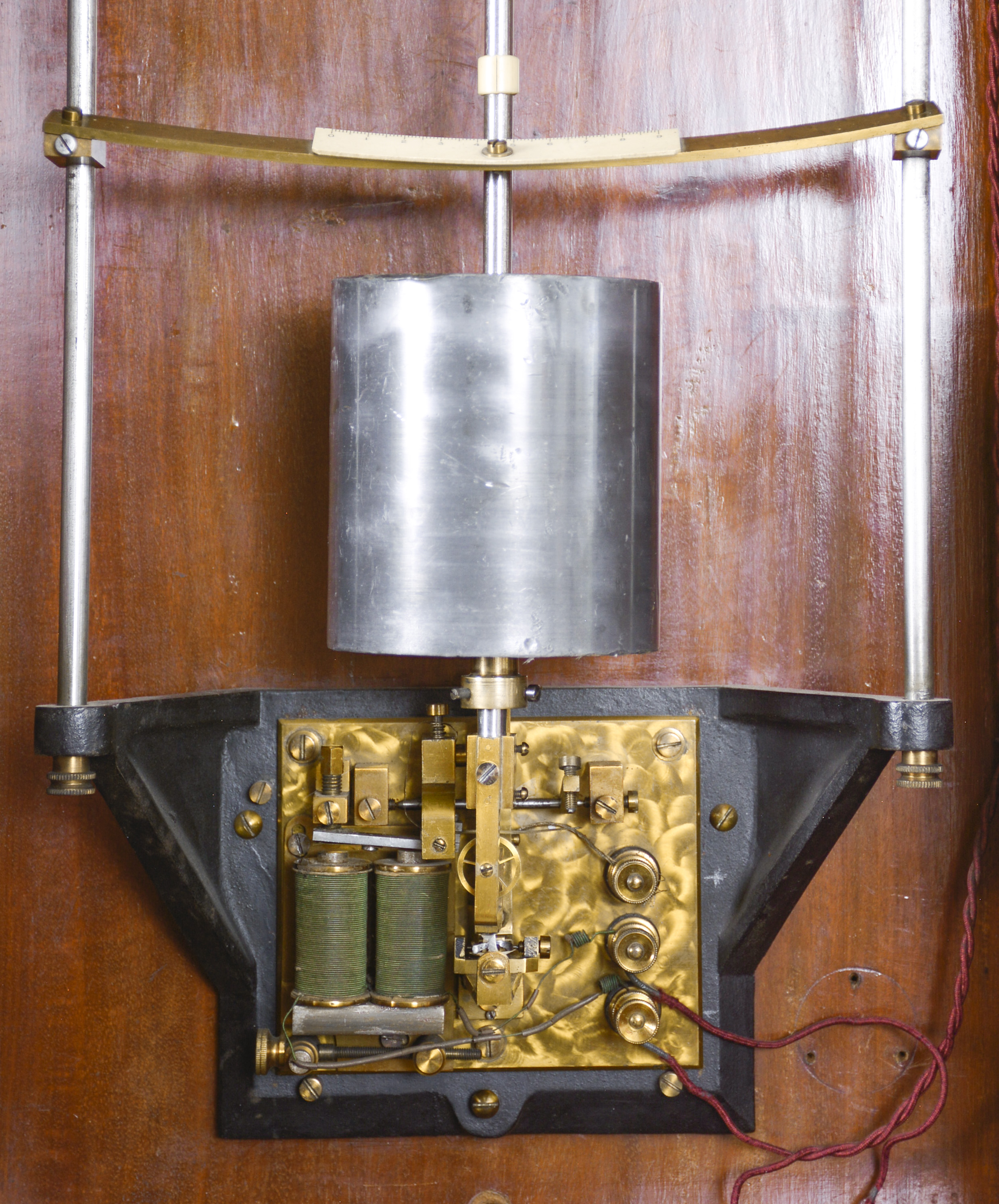
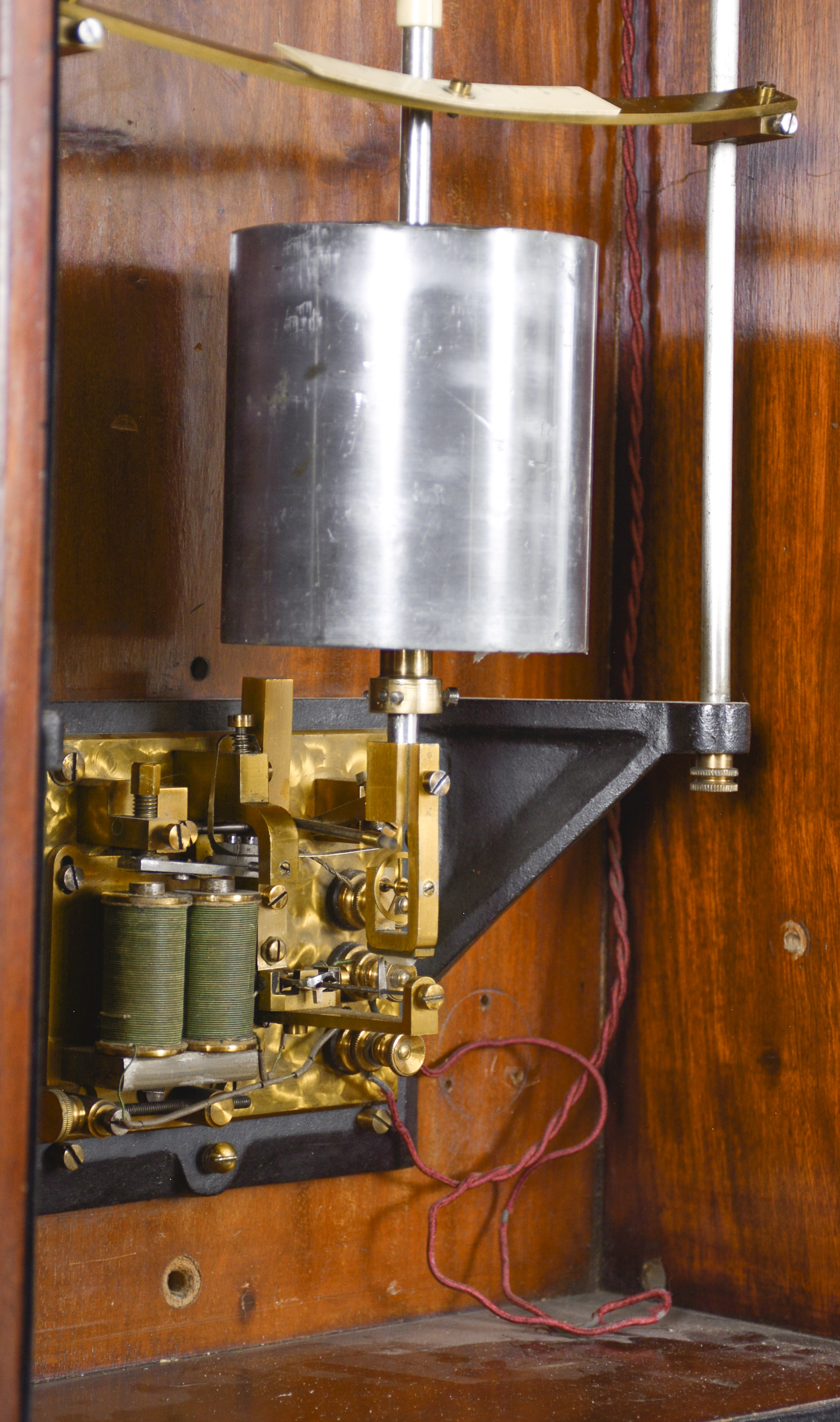
The Synchronome Co., Ltd., London, for Dykes Bros. Glasgow, London, a rare Shortt-Synchronome astronomical regulator with Shortt's inertia escapement, mahogany case with molded cornice and base, the glazed door with rectangular beveled glass, the upper section with round dial glass and carved spandrels, case sides with short, glazed, rectangular openings beneath the cornice, the signed, silvered astronomical dial with blued steel hands, dial movement with four wheel train and narrow, rectangular brass plates, case back with very heavy triangular cast iron suspension support for pendulum, having two invar compensation rods connecting it to the bottom mounted movement and supporting the beat scale, the movement with snailed brass backplate and agate tipped gravity arm, the arm electrically reset every second, and interacting with a wheel mounted to a carriage at the bottom of the pendulum rod, providing impulse at every vibration, invar rod with steel suspension and cylindrical lead bob
CONDITION:
case with minor dings and scratches, some door joints with minor separation, case sides with holes for wiring, door lock in place, but will not retain catch, escutcheon loose, turn catch added at bottom of door, filled hole where a similar upper catch was fitted, movement retains it's original lacquer, movement with minor oxide on steel components, pendulum retaining sleeve with screws in addition to the retaining pin, weight tray in old lacquer, bob with minor scratches, dents and dings, impulse wheel carriage with replaced unlocking jewel, the replacement made of nylon, beat scale a bit dirty. Frank Hope- Jones met William Hamilton Shortt in 1910, and soon thereafter, Shortt had analyzed the Synchronome pendulum impulse, and also became involved in improvements to the existing master clock design, thus beginning a journey which would ultimately result in the Shortt- Synchronome Free Pendulum Clock. The Inertia Escapement was meant to maintain constant amplitude through changes in barometric pressure or other disturbance, delivering impulse dependent on the pendulum arc- shorter for high amplitude, and longer for low. The pendulum receives impulse on every swing, the gravity arm released when the jewel at the bottom of the impulse wheel carriage contacts the release lever, dropping the gravity arm. The arm is then electrically reset, and is ready to provide impulse at the next swing. The invar rods connecting the pendulum suspension expand and contract with the invar pendulum rod, maintaining the relationship between the release jewel (at bottom of pendulum) and the release lever (mounted to movement) Hope- Jones presented a lecture to the British Astronomical Society in November of 1911, and one month later to the Royal Astronomical Society promoting the new regulator. Timekeeping was not much better than that of the the existing Synchronome master, and problems related to locking and unlocking of the gravity arm, as well as disturbances caused by impulsing at every swing prompted the abandonment of the design. Of the approximately twelve inertia escapement clocks believed to have been made, three are known; this example, one in the Science Museum in London, the other in a private collection.
ESTIMATE:
$8000
-
$12000
PRICE SOLD:
$20000
CIRCA: 1911
DIMENSIONS: 56.5 in x 14in x 8.5in
VIDEO:




 "
"
"
"
"
"
"
"
"
"
"
"
"
"
"
"